Playdough Is More Than Just Entertainment

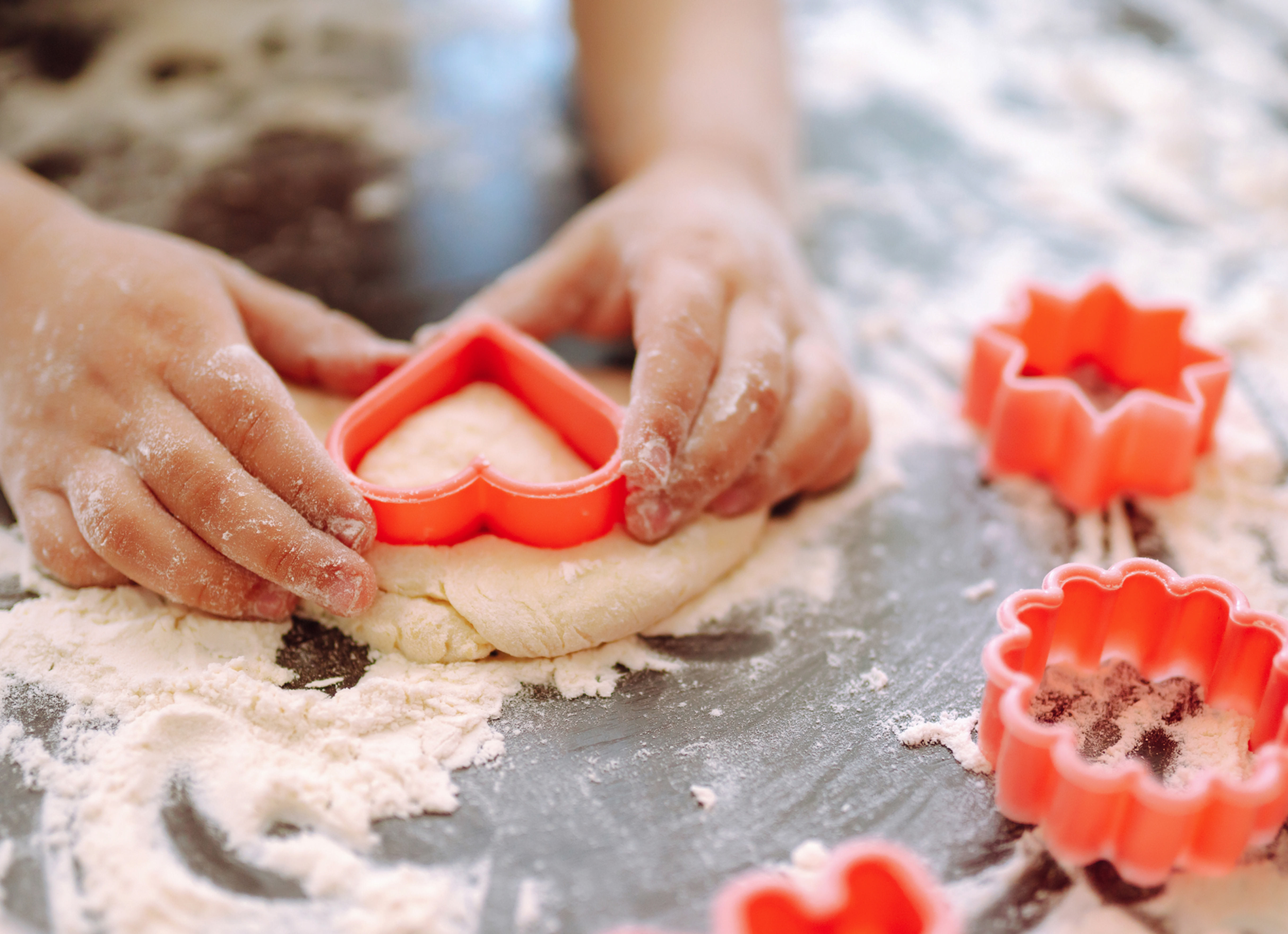
I'll never forget the number of times I'd set out a few containers of playdough in my classroom and hear an adult say, "Perfect, that'll keep them busy for a while." They weren't wrong. The children were busy. But as an early childhood educator, I wasn't simply watching children play. I was watching development happen right in front of me.
Over the years, I noticed that playdough had a way of drawing every child in differently. Some came to create, some came to experiment, and some simply came to squeeze. Yet every one of them was learning and developing in meaningful ways while they played.
As an early childhood educator, I saw the developmental benefits of playdough every single day. What looked like a simple activity was actually building the foundation for so many important skills.
To most adults, it looked like children making a mess. To me, it was one of the most valuable developmental activities I could put on a table.
More Than Just Strong Hands
Now, as a parent myself, I still reach for the playdough often. Not because I expect my children to create masterpieces, but because I know how much is happening every time those little hands push against the resistance of the dough.
One of the things many parents don't realize is that playdough isn't just exercising little fingers. As children sit and lean into the dough to press, push, squeeze, and roll, they're using their core to stay stable while strengthening their shoulders, arms, wrists, and hands. Those larger muscles provide the stability needed for the smaller muscles in the hands to do precise work.
That's why such a simple activity can have such a big impact on everyday skills like writing, using scissors, getting dressed, opening snack containers, feeding themselves with utensils, and fastening buttons. Those skills don't suddenly appear when children start school. They're built through playful experiences long before then.
One of the things I love most about open-ended activities like playdough is that they meet every child exactly where they are in their development. For one child, that might simply mean squeezing, squishing, and exploring the texture with their hands. Another might enjoy rolling long snakes or making tiny balls to strengthen their fine motor skills, while an older child may spend twenty minutes creating an entire bakery, dinosaur world, or family picnic from their imagination.
There isn't a right or wrong way to play with playdough. Each child naturally engages with it at the level they're ready for, which is one of the reasons it remains a favourite activity from infancy right through the early school years.
"Children learn as they play. Most importantly, in play children learn how to learn.” -O. Fred Donaldson
Development Through Play
While playdough is well known for strengthening fine motor skills, the learning doesn't stop there. As children create, they're also developing problem-solving skills. They test ideas, figure out what works, adapt when something doesn't go as planned, and learn that there is often more than one solution. There is no instruction manual for playdough, which encourages children to think creatively and make decisions independently.
Playdough is also a wonderful tool for building communication and language. Children naturally begin talking about what they're creating, asking questions, sharing ideas, and telling stories. Whether they're pretending to bake cookies, build a zoo, or make dinner for their family, they're expanding their vocabulary and learning to express their thoughts and ideas.
It also supports cognitive development as children sort, compare, count, make patterns, and explore concepts like size, shape, and quantity. Add cookie cutters, loose parts, toy animals, letters, or numbers, and the opportunities for learning continue to grow through hands-on exploration. When children play together, they also practise important social and emotional skills like sharing materials, taking turns, working together, and building confidence as they proudly explain or show others what they've created.
One of the reasons playdough has remained one of my favourite activities throughout my career is because it grows alongside children. The same container of playdough can captivate a baby exploring a new texture, a toddler learning to squeeze and roll, and a preschooler creating an entire bakery, dinosaur world, or family picnic from their imagination. As children grow, the play changes, but the opportunities for learning continue to grow with them.
That's why I love playdough so much. While your child thinks they're making cookies for a teddy bear or rolling the world's longest snake across the table, they're building strength, coordination, creativity, communication, confidence, and problem-solving skills through one simple activity.

The next time the playdough comes out and little pieces end up scattered across your table, remember that it isn't "just" play. Every squeeze, roll, pinch, and press is helping your child build the strength, coordination, and confidence they'll use in everyday tasks like writing, getting dressed, opening snack containers, using scissors, and feeding themselves. Sometimes the simplest activities really do provide the biggest opportunities for development.
Want to know what developmental skills your child is working on next?
Our free Birth to 5 Developmental Milestone Guide goes beyond a checklist. It helps you understand what each milestone means and provides simple, play-based ideas to support your child's development through everyday activities, like playdough.
Download your free Milestone Guide here:https://www.theparentfield.com/milestones-x
Explore more on early childhood development, and how to support your child’s milestones:
@theparentfield
The information shared on this blog is for educational and informational purposes only and is not intended as medical, professional, or legal advice. We are not healthcare professionals. Always consult with a qualified professional regarding your child or family’s specific needs. Use of this information is at your own discretion. For full details, please visit our Legal page.
References:
American Academy of Pediatrics. (2018). The power of play: A pediatric role in enhancing development in young children. Pediatrics, 142(3), Article e20182058. https://doi.org/10.1542/peds.2018-2058
Centers for Disease Control and Prevention. (2024). Important milestones: Your child by age.https://www.cdc.gov/ncbddd/actearly/milestones/index.html
National Association for the Education of Young Children. (2024). Developmentally appropriate practice (DAP).https://www.naeyc.org/resources/position-statements/dap
Ontario Ministry of Education. (2014). Excerpts from How Does Learning Happen? Ontario's Pedagogy for the Early Years. Queen's Printer for Ontario. https://files.ontario.ca/edu-how-does-learning-happen-en-2021-03-23.pdf


Comments